

In biological systems, the distinction between genotype and phenotype is evident and has significant implications for inheritance and evolution. The separation of these two elements is believed to have evolved before protein synthesis emerged, suggesting that early life lacked the complexities of modern genetic systems. This foundational principle is central to Crick’s Central Dogma of Molecular Biology, which outlines the unidirectional flow of information from DNA to RNA to protein, leaving little room for the possibility of backward information transfer from phenotype to genotype.
Ongoing discussions in the scientific community have reignited interest in the possibility of such reverse flows—the hallmark of ‘Lamarckian’ inheritance, a theory historically attributed to Jean-Baptiste Lamarck. Though his ideas have often faced scrutiny, contemporary biological phenomena such as DNA methylation and CRISPR-based adaptations hint at possible Lamarckian traits. However, the consensus remains that while reverse translation—information moving from protein back to nucleic acid—has not been observed in nature, it remains a captivating area for exploration, especially when considering artificial systems.
Recent advancements in digital DNA storage technology provide a unique framework to investigate these genetic processes. By encoding data as synthetic DNA, researchers can utilize the principles of digital information storage to simulate bidirectional information transfer. The potential for employing synthetic biology to analyze how such systems might function as a form of reverse translation raises intriguing questions about the nature of evolution.
To explore these concepts, a research team developed an artificial genetic system that mimics the Central Dogma but allows for ‘reverse translation’—the conversion of musical scores into DNA sequences and vice versa. This system used a specially designed code consisting of 256 four-letter codons responsible for representing various musical notes and durations. This enables not only the storage of sound in DNA but also the dynamic alteration of genetic material through changes in music.
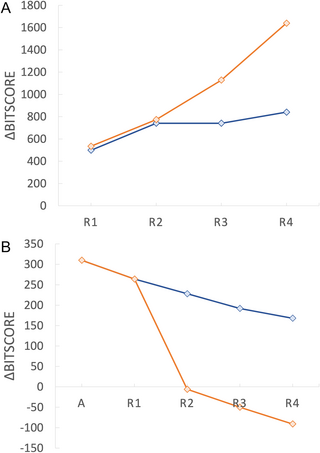
The team conducted experiments designed to simulate evolution in their system. By introducing modifications to the musical score, they could assess how changes impacted the accompanying DNA sequence, thereby delineating the traits of a bidirectional information transmission model. Their results indicated that synonymous mutations, typically considered neutral in traditional inheritance models, became irrelevant in this new framework because they could not be transmitted across generations. Conversely, non-synonymous mutations led to noticeable changes over time, suggesting that systems capable of reverse translation exhibit unique evolutionary dynamics.
In the course of their study, researchers implemented six distinct mutational scenarios to understand the impact of genetic modifications on evolutionary outcomes. They noted that even minimal alterations in the musical notes significantly affected the genetic translation and led to higher rates of mutation when compared to more straightforward DNA-only systems. Notably, this finding reinforces the argument that artificial systems mirroring Lamarckian principles could illuminate viewpoints on evolutionary biology.
Furthermore, to simulate a selection environment, the researchers conducted polls using a panel of volunteers who assessed varying versions of a musical piece—Beethoven’s “Ode to Joy”—each having undergone mutations. The voting process allowed them to establish preferences, effectively acting as an environmental pressure that influenced the musical evolution of the score through this artificial system. The outcomes demonstrated that human preferences towards less mutated versions correlated with signs of purifying selection, thereby revealing potential new routes for evolutionary tendencies.
However, the researchers acknowledged limitations in their study. They relied on a simplified MIDI system for their experiments, utilizing only a fraction of possible musical notes and often undergoing arbitrary code selections. Additionally, the mutations were contained to a single score, leaving open the potential for broader applications in further studies. The implications extend beyond music; questions arise whether similar methodologies could be applied to other forms of data—such as images or even more complex systems.
In essence, while the artificial framework engineered for this study does not fully replicate biological inheritance, it vividly illustrates the mechanics that could underpin systems with Lamarckian characteristics. As technology continues to evolve, especially in the intersection of digital data and synthetic biology, understanding these principles could reshape our perception of genetic evolution and adaptation, blurring the distinctions between genotype and phenotype and inviting further inquiry into the ever-fascinating dynamics of life.
The fusion of digital processes with biological principles opens a window to exploring how trait inheritance could function under different biological frameworks. The research underscores the potential of manipulating digital DNA systems to simulate various evolutionary scenarios, further blurring the lines between traditional Darwinian evolution and Lamarckian adaptation as we approach a new epoch in biological science.