


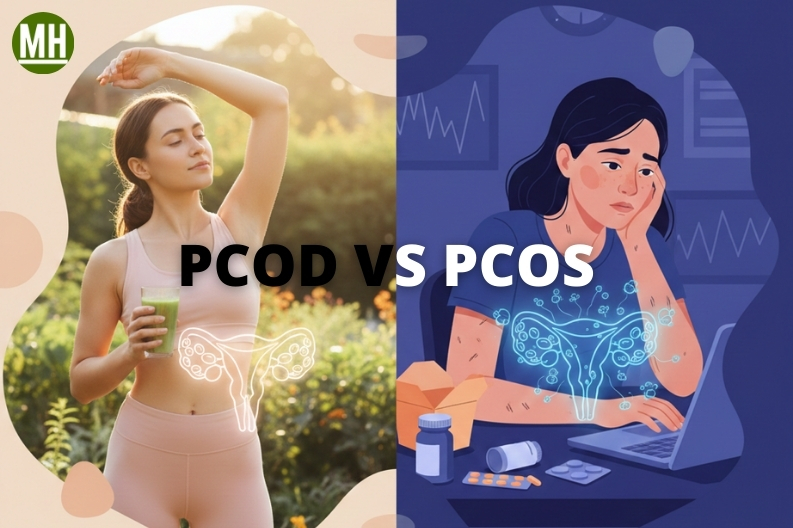
Many women face hormonal imbalances that interfere with their menstrual cycles. Nevertheless, one can get appropriate treatment by distinguishing PCOD from PCOS. Although most people hear these terms and assume they are the same, they refer to two very different conditions that have different effects on your body.
What is PCOD?
PCOD is a short form for Polycystic Ovarian Disease. It is an ovarian disorder in which eggs are released from the ovaries but they are either immature or only partially mature. As a result, these eggs gradually turn into small cysts.
Key Features of PCOD:
- Ovaries get larger.
- There is a slight hormonal imbalance.
- The disorder mainly impacts the ovaries.
- More frequent occurrence than PCOS.
- Usually less serious.
PCOD is a disorder that impacts about 33% of women who menstruate globally. So, it is a very common condition especially among women of childbearing age.
Common PCOD Symptoms:
- Irregular periods
- Weight gain around the abdomen
- Mild acne
- Hair thinning
- Fatigue
What is PCOS?
PCOS is the short form of Polycystic Ovary Syndrome. In contrast with PCOD, it is a very serious problem of metabolism and hormone secretion. Besides, it affects not only the ovaries but also the entire body system.
Key Features of PCOS:
- Major hormonal imbalance.
- Huge impact on metabolism.
- Elevated male hormone (androgen) levels.
- Less common than PCOD.
- Need for medical treatment.
Furthermore, it is estimated that PCOS affects around 9-10% of the female population worldwide, which is less common but more serious.
Common PCOS Symptoms:
- Very irregular periods or absence of periods.
- Excess hair growth on the face and body.
- Constant acne problems.
- Major weight gain.
- Unable to lose weight.
- High risk of infertility.
- Insulin resistance
Main Difference Between PCOD vs PCOS
Here’s a clear comparison table:
| Aspect | PCOD | PCOS |
|---|---|---|
| Severity | Less severe | More severe |
| Prevalence | Affects 20-30% of women | Affects 9-10% of women |
| Hormonal Impact | Mild imbalance | Severe imbalance |
| Treatment | Lifestyle changes mainly | Medical treatment needed |
| Fertility | Usually manageable | More challenging |
| Metabolic Issues | Rare | Common (diabetes, heart disease) |
| Weight Management | Easier | Difficult due to insulin resistance |
How PCOD Affects Your Body?
Since PCOD mainly affects the ovaries, women suffering from this condition usually have:
- Infrequent irregular periods.
- Unproblematic weight gain.
- Very few skin problems.
- Mostly normal fertility with just a little help.
Most women with PCOD are able to get pregnant naturally and only need a little medical help, which is very important.
How PCOS Affects Your Body?
PCOS, however, changes a number of organs and systems in the body, it is therefore a multi-system disorder. As a result, it causes:
- Metabolic syndrome (higher diabetes risk)
- Risk of heart disease.
- Sleeplessness due to apnea.
- Extreme fertility problems.
- Depression and anxiety.
- Risk of endometrial cancer.
Besides that, PCOS leads to insulin resistance, which complicates the regulation of blood sugar levels.
Treatment Options
PCOD Treatment:
- Healthy diet (low sugar and high protein).
- Consistent physical activity.
- Reduction of stress level.
- Weight loss (as little as 5% makes a big difference).
- Occasional hormone therapy.
PCOS Treatment:
- Pills for birth control to adjust the hormones.
- Drugs for controlling insulin.
- Fertility treatments, if necessary.
- Change of lifestyle
- Long-term medical supervision
Can PCOD Become PCOS?
Generally, PCOD doesn’t progress into PCOS. Nevertheless, both conditions require proper management. Additionally, early diagnosis helps prevent complications in either condition.
When to See a Doctor?
Seek medical advice if you notice:
- Irregular periods for several months
- Sudden weight gain
- Excessive hair growth
- Difficulty conceiving
- Severe acne
Similarly, regular check-ups help monitor your condition effectively.
Living With PCOD or PCOS
Both conditions are manageable with proper care. Moreover, many women lead healthy lives by:
- Following medical advice
- Maintaining healthy weight
- Exercising regularly
- Managing stress
- Getting adequate sleep
Conclusion
Knowing what distinguishes PCOD from PCOS helps women diagnose the problem and thus, find the right treatment. PCOD being a lighter condition, can be controlled by making dietary and lifestyle changes, whereas PCOS requires medical attention in the first place. Symptoms? Then go to a doctor who is an expert in women’s health for the right diagnosis and treatment plan just for you.
Remember, these two conditions are very common, and with proper management, you will be able to lead a healthy and happy life. Besides that, if we educate and thus break the stereotype, more women will be able to get the right treatment that they deserve.
Important Note: Always consult healthcare professionals for accurate diagnosis and treatment plans tailored to your specific condition.