

By using this site, you agree to the Privacy Policy and Terms of Use.
Accept
February 8, 2026 9:20 PM EST
Medical Herald
Search
  • Health Conditions
    Health ConditionsShow More
    Understanding the Key Difference Between PCOD vs PCOS: What Every Woman Should Know
    Understanding the Key Difference Between PCOD vs PCOS: What Every Woman Should Know
    Health Conditions
    Diet Drinks Linked to Increased Liver Disease Risk, Study Finds
    Health Conditions
    Experts Urge Rethink on Prediabetes Diagnosis and Treatment
    Diabetes
    Study Highlights Rising Heart Risks in Pregnant Women
    Pregnancy & Parenting
    ‘New Mom School’ Helps Women Through Postpartum Challenges
    Pregnancy & Parenting
  • Wellness & Self-Care
    Wellness & Self-CareShow More
    Herbal Foot Baths: Ancient Practice Gains Modern Wellness Traction
    Wellness & Self-Care
    Boosting Immunity: The Power of Holistic Approaches
    Healthy Living
    Understanding Major Causes of Death in America
    Healthy Living
    Study Links Chatbot Use to Increased Symptoms of Depression
    Mental Health
    Transforming Anxiety and Stress into Joy and Fulfillment
    Wellness & Self-Care
  • Nutrition & Fitness
    Nutrition & FitnessShow More
    Shilajit Benefits
    Shilajit Benefits: Ancient Himalayan Secret for Energy, Brain Health, and Longevity
    Nutrients & Supplements
    Affordable Grain-Based Dishes for a Healthier Diet
    Healthy Recipes
    Understanding Prebiotics and Probiotics for Better Health
    Nutrition & Fitness
    Minnesota Health Officials Warn of Salmonella in Supplements
    Nutrients & Supplements
    Fibermaxxing: The Rising Trend in Nutritional Focus
    Diet & Nutrition
  • Innovation
    InnovationShow More
    Weight-Loss Drugs Require Lifelong Use, New Study Indicates
    Drugs & Medications
    Structure Therapeutics Faces Challenges with Weight-Loss Treatments
    Drugs & Medications
    Dr. Hosen Kiat: Advancing the Frontiers of Cardiovascular Science
    Innovation
    FDA Issues Warning for J&J and Legend’s Cancer Treatment Carvykti
    Drugs & Medications
    GLP-1 Medications Transform Health and Household Budgets
    Drugs & Medications
  • News
    NewsShow More
    Challenging the 1918 Influenza Pandemic Narrative on BrightU
    News
    Brazilian Fitness Influencer in Coma After Diving Accident
    News
    Chelsea Handler Declares Love for Drugs and Dismisses Sober Dating
    News
    New Leadership at Parenting Resource Center in Austin
    News
    Advances in Nigeria’s Real-Time NTD Treatment Reporting System
    News
Font ResizerAa
Medical HeraldMedical Herald
  • Health Conditions
  • Wellness & Self-Care
  • Nutrition & Fitness
  • Innovation
  • News
Search
  • Health Conditions
  • Wellness & Self-Care
  • Nutrition & Fitness
  • Innovation
  • News
Follow US
Copyright © 2025, Medical Herald. All Rights Reserved.
Home » Health Conditions » New Insights into Tuberculosis and Macrophage Interactions

New Insights into Tuberculosis and Macrophage Interactions

Grace Feldman
By Grace Feldman
Published: October 9, 2025
4 Min Read
Share

Pulmonary tuberculosis (PTB) accounts for roughly 85% of the global disease burden caused by Mycobacterium tuberculosis (Mtb), and understanding its mechanisms is vital for improving prevention and treatment outcomes. In a recent study using a mouse model, researchers sought to unravel how lung-specific environments can promote Mtb survival and replication, highlighting the complex interactions between dysplastic macrophages and lung tissue.

Despite the presence of a robust systemic immune response, certain immunocompetent individuals fail to contain Mtb, leading to active pulmonary disease characterized by cavitary lesions from which infectious aerosols can be transmitted. This study focused on the extended repercussions of primary lung lesions, particularly in B6.Sst1S mice — a strain susceptible to tuberculosis due to genetic factors — following hematogenous spread from primary lesions.

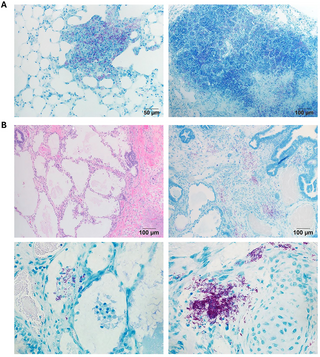
Initially, secondary lung lesions appear to exhibit localized immune responses, with organized tertiary lymphoid follicles akin to those in resistant B6 mice. These early lesions predominantly house non-replicating bacilli, indicating a temporary containment of the bacteria. However, as the disease progresses, notable changes occur, including an increase in myeloid cell populations, differentiation of macrophages, dissolution of lymphoid structures, and the emergence of dysplastic lung epithelial cells. This cascade of events culminates in the development of necrosuppurative pneumonia, mirroring the advanced stages of pulmonary tuberculosis observed in human patients.

The research team conducted fluorescence multiplex immunohistochemistry and spatial transcriptomic analyses on the divergent TB lesions that develop in these susceptible mice. The findings revealed that the inflammation-injured lung and aberrantly activated macrophages actively contribute to the detrimental local microenvironment conducive to the virulent Mtb.

A critical component of this understanding centers around the implications of lung tissue and its cellular composition. When fragments of lung and spleen tissues were implanted subcutaneously prior to infection, the lung implants retained the ability to form organized granulomas with necrosis and Mtb replication, thus showing that the lung’s cellular makeup — rather than oxygen levels — dictates PTB progression.

Additionally, the results indicate that significant interactions between activated macrophages and compromised lung resident cells contribute to the susceptibility of immunocompetent hosts to TB. This insight suggests that these interactions — which appear to be evolutionarily conserved — could serve as potential targets for host-directed therapies aimed at tuberculosis.

The investigation also noted that approximately 5-10% of individuals infected with Mtb would develop active TB later in life, particularly following primary infections acquired during childhood. These findings underscore a need for further research to understand why specific immune responses fail in lung environments and how this variation impacts TB transmission.

The importance of the mice model used is noteworthy, as it enables scientists to mimic the human disease without the need to directly infect the lungs through aerosolized bacteria, which is the usual method in experimental studies.

In conclusion, the study suggests a nuanced understanding of pulmonary TB progression, demonstrating how dysregulated macrophage activation and the maladaptive repair process in lung tissue can create an environment conducive to Mtb replication. Such findings hold promise for developing more effective therapeutic strategies aimed at mitigating tuberculosis pathogenesis and spread.

The conclusions from this study were detailed in the paper ‘Dysplastic lung repair fosters a tuberculosis-promoting microenvironment through maladaptive macrophage polarization,’ published in PLoS Pathogens by Yabaji et al. This work received funding from the National Institutes of Health and emphasizes the collaborative necessity for targeted interventions in the fight against TB.Diseases & Conditions

TAGGED:Tuberculosis
Share This Article
Facebook LinkedIn Email Copy Link

HOT NEWS

Understanding the Key Difference Between PCOD vs PCOS: What Every Woman Should Know

Understanding the Key Difference Between PCOD vs PCOS: What Every Woman Should Know

February 6, 2026
Shilajit Benefits

Shilajit Benefits: Ancient Himalayan Secret for Energy, Brain Health, and Longevity

Shilajit is a gummy, resinous material that drips from crevices in rocks located on high mountains, primarily the Himalayas. Notably, it has been a natural remedy highly praised…

February 5, 2026

Weight-Loss Drugs Require Lifelong Use, New Study Indicates

Experts say weight-loss medications like Wegovy require lifelong use to maintain results, as stopping treatment…

January 26, 2026

Affordable Grain-Based Dishes for a Healthier Diet

These affordable grain-based recipes make it easy to enjoy healthy, plant-forward meals while saving money…

January 26, 2026

YOU MAY ALSO LIKE

Cat’s Crying Leads to Surprising Vet Diagnosis

A viral TikTok reveals a cat’s cries were due to obesity, not illness—prompting laughter, empathy, and a serious reminder about…

October 21, 2025

Celebrities Speak Out on Ozempic and Weight Loss

Lizzo, Nick Carter, Kathy Bates, and others share their experiences with Ozempic, revealing the emotional and physical realities behind weight…

October 9, 2025

Study Links Fatty Liver Disease to Sugary and Diet Drinks

A new study reveals that both sugary and diet sodas increase fatty liver disease risk, with diet drinks posing an…

October 16, 2025

‘New Mom School’ Helps Women Through Postpartum Challenges

Greenville’s New Mom School, founded by Nicole Parmelee, helps mothers navigate postpartum recovery with expert guidance and a supportive community.

October 31, 2025

Medical Herald is your trusted source for medical news, scientific research, health policy updates, and expert insights from around the world. 

Category

  • Health Conditions
  • Wellness & Self-Care
  • Nutrition & Fitness
  • Innovation
  • News
  • Privacy Policy
  • About Us
  • Contact

Follow US: 

  • Grow Big Agency Sites:
  • London Business Journal
Copyright © 2026, Medical Herald. All Rights Reserved.
Welcome Back!

Sign in to your account

Username or Email Address
Password

Lost your password?