




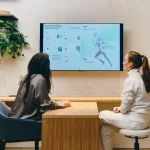


One slide at ThinkAI 2026 showed twelve weeks of home blood pressure readings for a single person. The person was illustrative. The pattern was not.
In week three, the home readings began trending upward, and observational AI flagged the change for review. In week four, a clinician looked at the trend, adjusted the medication, and the care team followed up. By week ten, systolic pressure had fallen to 142 from a baseline of 158. That is still above the control target of 130. Under ACCESS it counts anyway, because a drop of 15 points or more from baseline meets the improvement target.
Former U.S. Chief Technology Officer Aneesh Chopra moderated the panel, which focused on what the model asks of care teams now that the policy is in place. For Raj Toleti, chairman and chief executive officer of Andor Health, which hosts the conference, the blood pressure example is the whole argument in one chart. “Nothing in that story happened during an office visit,” Toleti says. “The improvement came from someone watching the readings in week three and a clinician acting in week four. ACCESS pays for that work. Most care teams are still organized around the visit.”
Four tracks, each with its own targets
The model’s full name is Advancing Chronic Care with Effective, Scalable Solutions. It is a ten-year CMS Innovation Center model for technology-supported chronic care in Original Medicare. It launched in July 2026 with four tracks, and each track has its own measures.
The early cardio-kidney-metabolic track covers hypertension, or a combination of conditions such as high cholesterol, central obesity, and prediabetes. It tracks blood pressure, LDL cholesterol, A1c, and weight. The cardio-kidney-metabolic track covers diabetes, chronic kidney disease, and atherosclerotic heart disease, and adds kidney measures. One of its targets is an A1c below 7.5%, or a one-point drop. A patient enrolls in one of those two tracks, never both.
The musculoskeletal track covers chronic pain lasting more than three months and uses validated patient-reported scores for pain and physical function. The behavioral health track covers depression and anxiety, measured with the PHQ-9 and GAD-7. A patient can meet that target by holding a PHQ-9 score below 10 or by improving five points.
Four more tracks begin in April 2027: heart failure, COPD, substance use disorder, and tobacco cessation. CMS expects that with those additions about three in four Medicare fee-for-service beneficiaries will qualify.
CMS assesses results at the organization level. Through December 2027, the bar is half of aligned patients meeting their targets, and part of each payment is withheld until results are reconciled.



A patient’s starting point counts
The improvement pathway is the detail that changes clinical operations most. A patient who starts far from control can still count as a success, which makes the sickest patients worth reaching first.
It also makes the baseline the most important number in the program. “If you do not capture an accurate baseline at enrollment, you cannot prove the improvement later,” Toleti says. “That sounds administrative. It is the difference between getting credit for the patient whose pressure fell 16 points and getting nothing.”
Continuous measurement has practical requirements. Home devices have to transmit, and patient-reported scores have to be collected on schedule. Someone has to review what comes in and separate real change from noise, and a clinician with authority to adjust treatment has to act within days. The panel’s discussion topics followed that chain: which measures matter, how to track them continuously, how to align clinical, financial, and technology goals, and what staffing and workflow changes come first.
The total cost of care question
Chopra opened by asking the health system leaders on stage how urgent this shift feels in their boardrooms. The panelists came from very different starting points. At Orlando Health, chief digital and information officer Novlet Mattis has led the system’s work to replace the paper clipboard at check-in. Dr. Nick Patel spoke to why the University of Maryland Medical System is helping integrate ACCESS. At Ballad Health, chief physician executive Clay Runnels, MD, addressed how a rural system prioritizes care models built on longitudinal patient data.
The follow-up the panel posed is the one leaders should take home: how would your priorities change if you were responsible for the total cost of care? A system that answers that honestly tends to find its chronic disease patients, and the weeks between their visits, near the top of the list.
Where to start
Toleti’s advice is narrow. Pick one ACCESS track where your system already sees the patients. Capture the baseline for that population now. Then decide who on your side will own the patient’s trajectory between visits, and whether that work stays in-house or is shared with a partner that will be held to the same number.
“Outcome-aligned payment is the policy,” Toleti says. “Owning the outcome is the operating model. The systems that build the operating model will be ready for whatever the policy does next.”